whitefeatherhunter.ca

BLOOD MAGIC IN BIOTECH
2021
16S rRNA sequencing of the vaginal microbiome
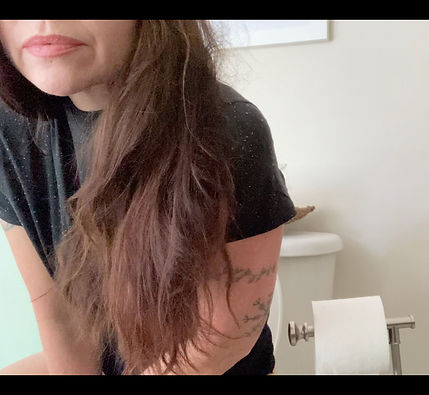
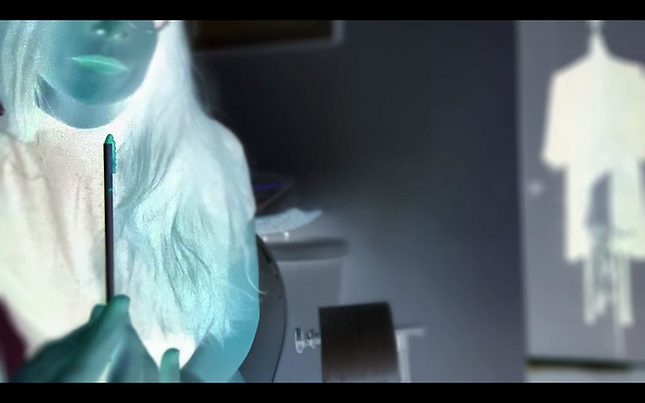
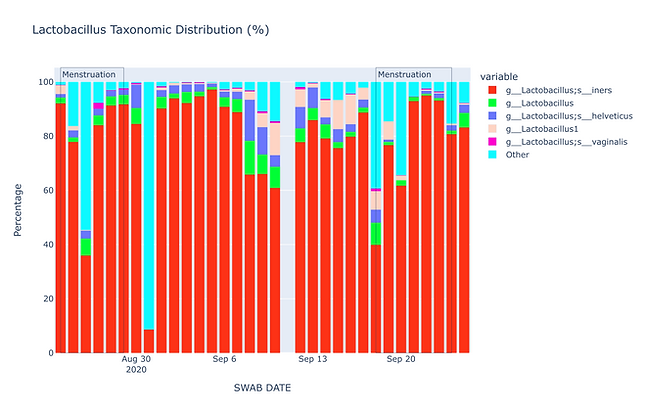
Blood Magic in Biotech investigates the vaginal microbiome through processes of genomic extraction, data analysis, and embodied laboratory practice. Working across domestic and institutional laboratory environments, the artist positions her own body as both subject and site of inquiry, generating microbiome data through daily self-sampling across a full menstrual cycle.
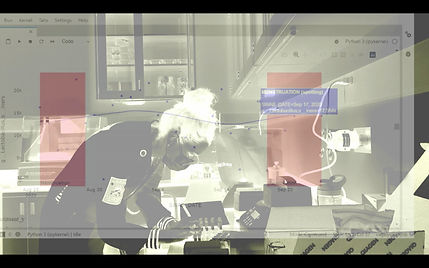
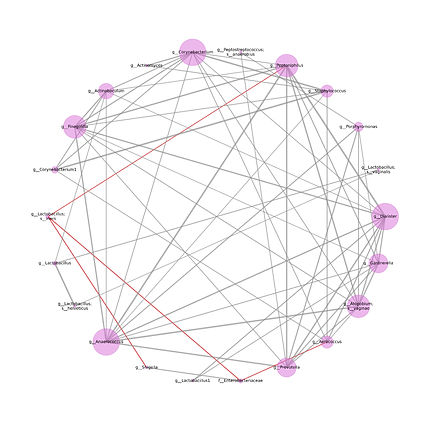
Using 16S rRNA sequencing and computational analysis, the project examines the microbial communities of the vaginal ecosystem while simultaneously interrogating the frameworks through which such data is produced and interpreted. Laboratory protocols—typically designed to anonymize and abstract biological material, are reworked through strategies that re-personalize the data, embedding it within lived experience, memory, and cultural context.
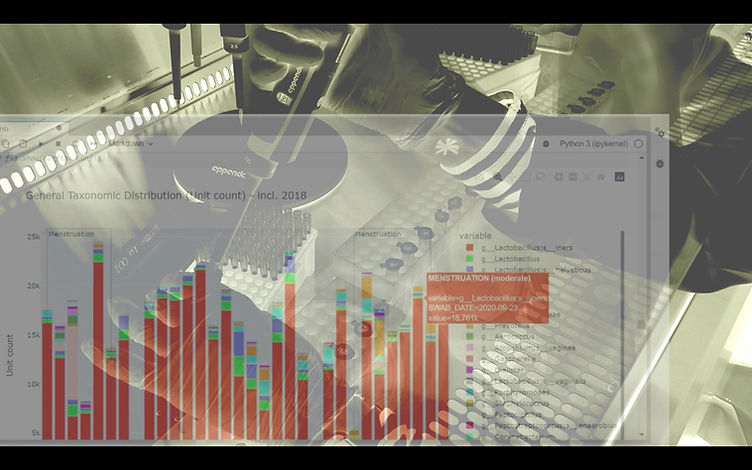
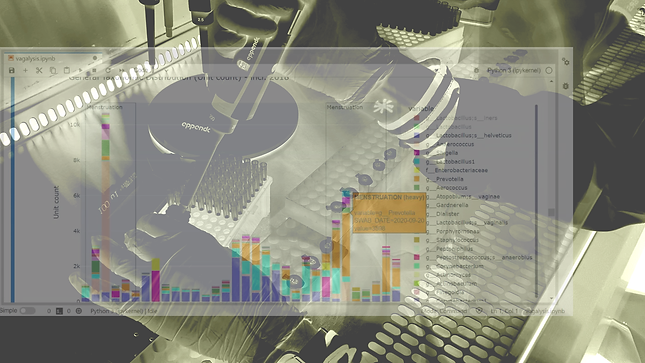
The work unfolds through performance and data visualization incorporated into video, where which acts of swabbing, extraction, coding, and analysis become ritualized gestures. These processes expose the choreography of scientific knowledge production, revealing how data is shaped through layers of symbolic encoding. By reintroducing subjectivity into these systems, the project challenges the notion of biological data as neutral or objective.
Blood Magic in Biotech highlights dynamic interactions of microbial bodies within and across human systems—as a means of understanding health, identity, and embodiment beyond reductive biomedical models. Through this work, vaginal and menstrual materials, historically framed as waste, pollutant, or biohazard are reclaimed as sites of knowledge production. Blood Magic in Biotech proposes a reconfiguration of biotechnology as a space of self-determination, where intimate biological systems are engaged as players in the production of biocultural meaning.
Video: 4:51 min, with electrochemical audio produced at Eastern Bloc.
The sample preparation for sequencing was conducted in Molecular Ecology and Evolution Lab, Université de Montréal. The full body of work was published as a chapter in the Routledge Companion to Performance and Science (2025).