the witch in the lab coat
Best viewed on a desktop browser for an infinitely better visual experience.
whitefeatherhunter.ca

ECOTECH: LANDSCAPE AS LAB
This section brings together several bodies of work that engage the environment as a distributed site of experimentation, where ecological systems, humans, and technological processes intersect. Pheromonal exchanges, lichen biopolitics, bioremediation, ritualized sensing practices, and embodied encounters with coyotes unfold in situ, shaped by the agencies of more-than-human actors whose behaviours cannot be predicted or controlled. These works are grounded in an ecotechnofeminist artistic practice that examines how technologies participate, or fail to participate in the restructuring of relationships between human and more-than-human worlds.

THE PHEROMONE TREES AND COYOTE
The Pheromone Trees and Coyote was an experiment in interspecies interaction through biochemical intervention. Using DIY estrogen extraction protocols, ovulation pheromones were extracted from the artist's body and deployed within a disrupted forest environment to attract local wildlife. The work engages a site where uneven species distribution, military toxicities, and ecological imbalance shapes patterns of presence and absence.
PROSPECTIVE FUTURES: THE AURELIA PROJECT
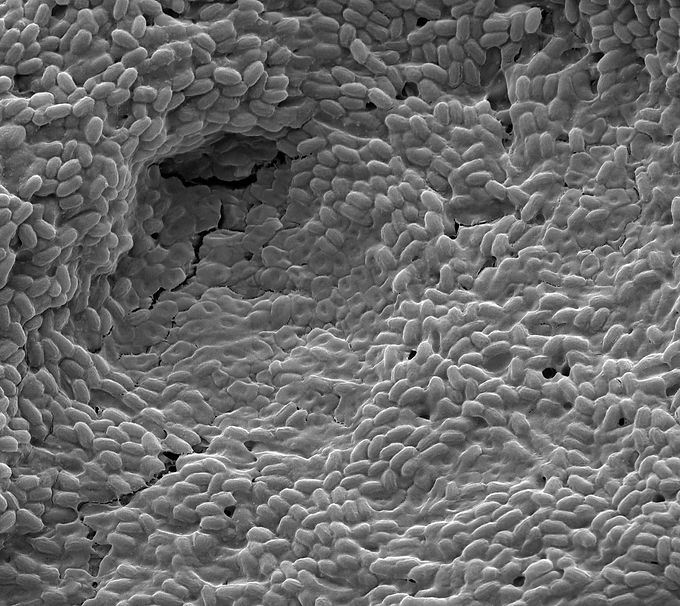
Prospective Futures: The Aurelia Project was developed as part of the BIOTA series, facilitated by IOTA Institute, and marked the first Faculty of Science bio-art residency at Saint Mary's University. The project addressed the contaminated legacy gold mine tailings sites in Nova Scotia, combining plant-based and microbial strategies towards bioremediation. WhiteFeather explored the bacterium, Cupriavidus metallidurans, known for its capacity to metabolize toxic metals and generate micro-particles of 24k gold, through lab experiments towards a poetic intervention.

TRANS-PLANTED SIGNALS: Navigating Sensory Relationships with Plants, Place, and Pathways
Trans-planted Signals is a research-creation video work that investigates relationships between plants, place, and pathways of adaptation across hemispheres: filmed in Maui, Hawai‘i and around Boorloo (Perth), Western Australia, the project traces resonances between two coastal ecologies that share a long, complex history of botanical transposition through migration and colonization across the Pacific Ocean.

THE TROUBLE WITH JÄKÄLÄ
The Trouble with Jäkälä was developed during an Ars Bioarctica residency at the Kilpisjärvi Biological Research Station, located in Kilpisjärvi, Sápmi (Northern Finland). The project began with an investigation into Sámi uses of lichen, and evolved into a study of the eco-political tensions surrounding land use and conservation in Kilpisjärvi. Research revealed an ongoing conflict between Sámi reindeer herders and station biologists whose work informs government policy, prompting a shift toward examining the region as a contested ecological and cultural site.
BLÓM + BLÓÐ
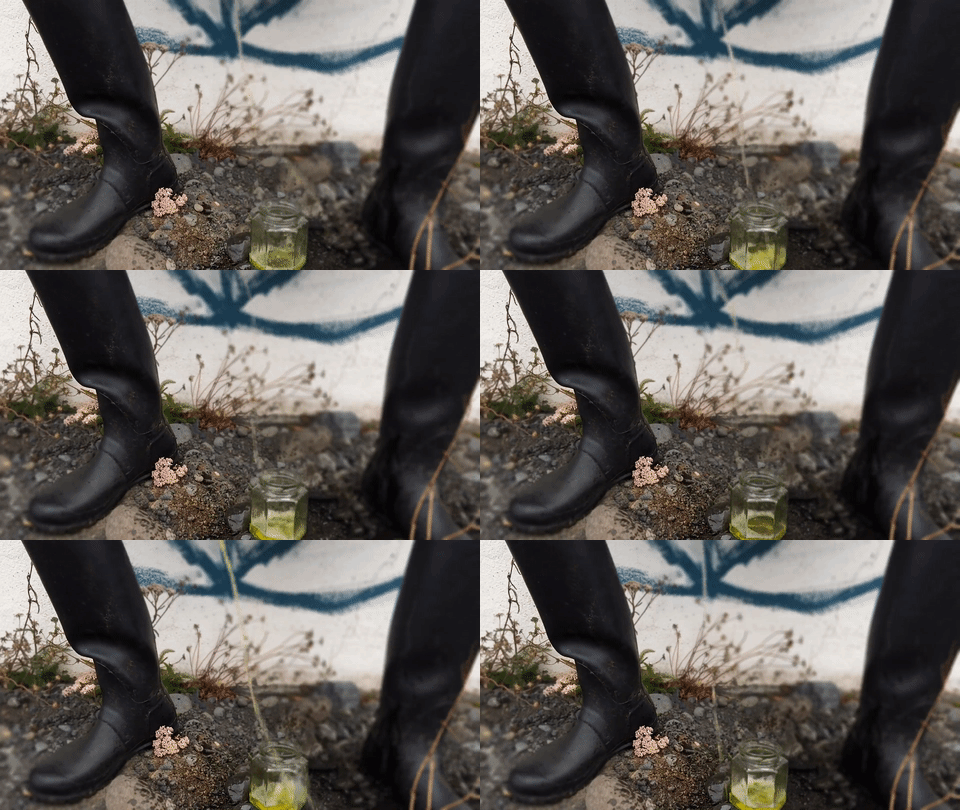
Blóm + Blóð (Icelandic for “flowers + blood”) presents performance as embodied research, engaging the landscape as laboratory and studio. Developed during a residency at the Icelandic Textile Centre, the work follows the artist navigating the autumnal terrain of northern Iceland, collecting natural dye and fibre materials, and using elements of the landscape as tools for making. The landscape is treated as an active system that shapes both method and outcome, fostering an ecological awareness grounded in experiential practice.
(LAB)YRINTH
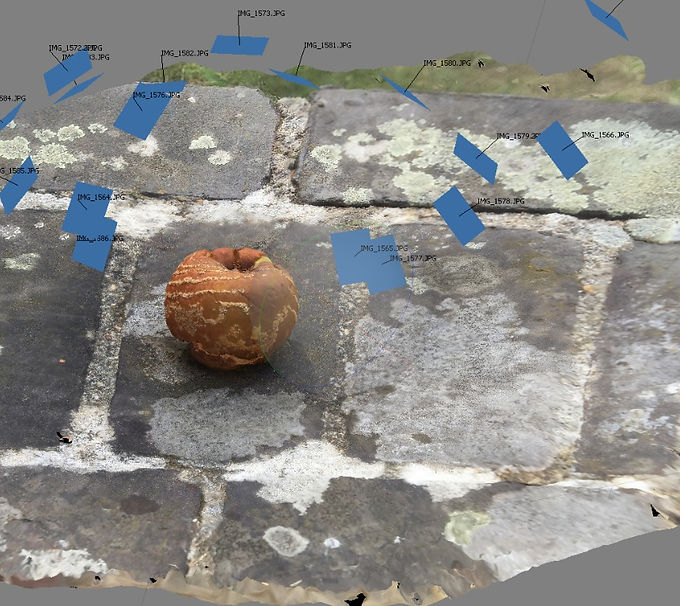
(LAB)YRINTH was a collective research-creation project developed in Paris as part of the Useful Fictions Symposium, hosted by the Chaire “arts & sciences” at École Polytechnique in partnership with the University of California, Davis. The project engaged the campus landscape as a site of experimental inquiry, combining scientific, sensory, and ritual-based methodologies to re-map space beyond institutional and technocratic frameworks. Through practices including recognition walks, soil sampling, DIY techniques, photogrammetry, and collective ritual, the group developed alternative modes of sensing, naming, and knowing.

FLOAT I & II
2009
Float was a site-specific interactive performance composed of two parts—Float I and Float II—developed at the White Rabbit Open Air Art Festival in Red Clay, Nova Scotia. Structured as a guided “property tour,” the work led participants through a series of ponds on the site, reframing the landscape as a staged environment of instruction, risk, and misdirection.