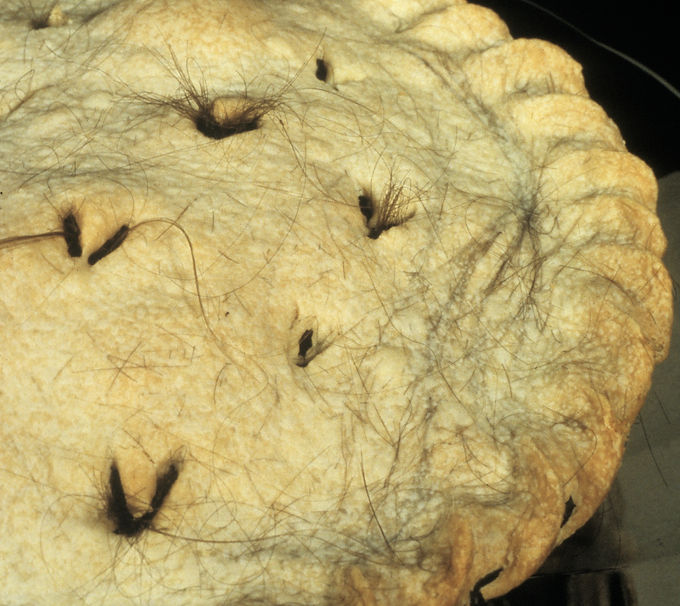
the witch in the lab coat
Best viewed on a desktop browser for an infinitely better visual experience.
whitefeatherhunter.ca

FOUNDATIONS / icky materiality
2001-2015
These selected early works frame the body as an ephemeral, contested phenomenon shaped through material, cultural, and symbolic processes. Utilizing human hair, menstrual blood, animal remains and other found materials, they interrogate femininity, sexuality, taboo, and contagion. Through weirding traditional textile practices, rogue sculptural assemblage, and biomaterial development with storytelling, bodies are brought into new forms of disruptive presence (and absence). Drawing on myth, folklore, and embodied labour, these works also engage ritual practices, establishing an early convergence of magic and biomaterials. Developed alongside the emergence of bioart as a field, they establish an early engagement with biological media through feminist material practices.

ALMA
Alma is a rogue taxidermy sculpture composed of human hair, animal remains, and found materials. Initially encountered in gallery settings, Alma later exploded into digital culture notoriety, going viral in 2012 with over 6 million views within a few days, hitting the top front page post on reddit. It later re-emerged in 2015. During this process, online audiences named the figure “Hoof Hand,” transforming it into a distributed, participatory identity. Alma exemplifies how bodies become culturally animated through circulation, projection, and collective authorship.

Biological Thresholds
This grouping of works marks a shift toward explicit engagement with biological and material processes, introducing questions of growth, pathology, and the instability of the body at the level of tissue and development. By integrating biomaterials, speculative storytelling, and distributed forms of encounter between gallery, public space, and digital environments, they establish a transition from object-based practice toward systems thinking and para-scientific worldbuilding.

CLEW
Clew is a large-scale textile installation constructed from handspun human hair, using knotting, netting, rope-making, and knitting. Installed in both gallery and outdoor contexts and activated through performance, the work draws on maritime histories, storytelling traditions, and mythic archetypes to explore the entanglement of language, labour, and the body. Structured through acts of binding, looping, and accumulation, Clew treats textile as a medium through which identity, memory, and desire are embedded and transmitted.

FEMILIAR
Femiliar marks an early investigation into the body as a material and cultural site, explored through textile and domestic practices, and the use of human hair and menstrual blood. Engaging themes of femininity, sexuality, taboo, and labour, the work situates the body within systems of cultural encoding and symbolic meaning. Drawing on myth, folklore, and lived experience, these works examine how bodies are shaped through inherited narratives and practices.

HOMME FATALE
Homme Fatale is a mixed-media sculptural work that incorporates a black bear jaw, human hair, fur, and wax-cast facial elements. The work draws on traditions of taxidermy and figurative display, inverting the trope of the “femme fatale,” to propose a destabilized masculine subject shaped by the same forces of myth, desire, and symbolic construction. Developed in parallel to Alma as a counterpart, the work extends an ongoing investigation into gendered embodiment, hybridity, and the fabrication of humanimal forms.

Early Hybrid Assemblages and Speculative Bodies
This grouping of works develops an early investigation into the construction of hybrid forms through assemblage. Working with human hair, animal remains, and found materials, these projects engage themes of contagion, taxonomy, superstition, and the unstable boundary between artifact and organism. Drawing on folk practices, pseudo-scientific classification, and speculative fabrication, this period explores how matter can be pieced together from disparate parts, animated, and made to signify as life, laying the groundwork for later investigations into synthetic anatomies and biofabrication.